
"Sudan coffee history"
200 article(s) found

Introduction to the origin of coffee-- the uniqueness of Sudanese boutique coffee the taste of Sudanese coffee
The civil war almost destroyed coffee production. Two decades of disastrous civil war in southern Sudan has claimed millions of lives and caused untold damage to rural areas, including the coffee industry. Robbins coffee is now grown in the south as in the past, while Arabica coffee, which used to be wild, is grown in the north and east of the country. In history

Coffee training Culture: coffee feelings of the Sudanese
It is no stranger to people to mention coffee. However, if you enter Africa and enter the country of Sudan, you will gradually find that there is an inextricable bond between Sudanese and coffee.

A brief introduction to the origin, development, history and culture of excellent tin card boutique coffee beans
Tibica coffee, native to Ethiopia and southeastern Sudan, is the most widely cultivated variety of coffee in the Western Hemisphere. The plant is stronger, but not light-tolerant, and the yield is higher in Hawaii. The top leaf of Tibika is red and copper, which is called red top coffee. Bourbon coffee is a variety of small-grain coffee second only to Tibica. At first, the main branch and the trunk grew upward at 45 degrees, drooping with the fruit load, and lateral branches.

Kenya--Osaya Cooperative--Pearl Bean (PB) Kenya Cultivation
Kenya is 5,826,460,000 square kilometers across the equator, bordering Somalia to the east, Ethiopia and South Sudan to the north, Uganda to the west and Tanzania to the south. It is bordered by the Indian Ocean in the southeast and has a coastline of 536 kilometers. Kenya is 5,826,460,000 square kilometers, straddling the equator, bordering Somalia in the east and Ethiopia and South Sudan in the north.

Ethiopian Coffee History Ethiopia Harald Coffee
For more information on coffee beans, please follow the coffee workshop (Wechat official account cafe_style) Ethiopia is recognized as the birthplace of coffee, but it must be added that the Arabica line was first discovered in southern Sudan and did not flourish until it spread to Ethiopia. So people here began to eat coffee fruit, at first when

The best coffee producing area in Uganda the Ruwensori Mountains in the north and west of the country
The civil war almost destroyed coffee production. Two decades of disastrous civil war in southern Sudan has claimed millions of lives and caused untold damage to rural areas, including the coffee industry. Robbins coffee is now grown in the south as in the past, while Arabica coffee, which used to be wild, is grown in the north and east of the country. In history
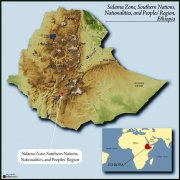
The birthplace of coffee beans, the producing areas and stories of Ethiopian boutique coffee beans.
The Federal Democratic Republic of Ethiopia (The Federal Democratic Republic of Ethiopia), or Ethiopia for short, is a country located in northeast Africa. It is bordered by Djibouti and Somalia to the east, Sudan and South Sudan to the west, Kenya to the south and Eritrea to the north. The plateau accounts for 2% of the country's area, with an average elevation of nearly 3000 meters.

Kenya Kam Chuk Valley Coffee Bean History Introduction
Pay close attention to the coffee comment (Weixin Official Accounts vdailycom ) and find a beautiful cafe to open its own small shop. The Republic of Kenya is located in eastern Africa, with the equator running through the middle and the Great Rift Valley running through the north and south. It borders Somalia in the east, Tanzania in the south, Uganda in the west, Ethiopia and South Sudan in the north, and the Indian Ocean in the southeast. The coastline is 53 meters long.

Katim Coffee Bean Grown at Low Altitude History and Culture
Katim, as a breed that has taken root in Yunnan, I love and hate it. Although it had many shortcomings and was not suitable for high-altitude cultivation, there was still a lot of room for improvement, and it was getting better and better. How to discover more of its advantages and take advantage of it is the most important. In the domestic circle of popular light baking pursuit of sour aroma and sweet taste

Ethiopian Coffee Manor with rich nutty flavor and taste characteristics
Ethiopia is located at 6 ~ 9 degrees north latitude and 34 ~ 40 degrees east longitude. It is located in the center of the Horn of Africa and is a landlocked country. It is bordered by Djibouti and Somalia to the east, Sudan to the northwest, Eritrea to the north and Kenya to the south. [5] there are mainly mountain plateaus in Ethiopia, and most of them belong to the Ethiopian plateau. The central and western regions are the main body of the plateau, accounting for the whole territory.

Introduction of coffee producing countries in Africa-introduction of coffee producing areas in Ethiopia, Kenya and Yemen
Africa is the third largest coffee producer in the world, after South America and Asia. Ethiopia, Kenya and Yemen are the main coffee products in Africa. Ethiopia is the largest Arabica producer in Africa, followed by Kenya. Yemeni coffee production, which monopolized the global coffee market before the 18th century, is declining year by year and is about to disappear from the coffee map. First of all, let's talk about
Global warming Coffee is coming to an end
Wild Coffee trees Wild Coffee the study, published in the journal Pl os One of the Public Library of Science, was conducted by the Royal Botanical Gardens and scientists from Ethiopia, led by Alan Davis, a coffee expert at the Royal Botanical Gardens. Davis, who has been studying coffee for more than 15 years, points out that there are 125 kinds of wild coffee.

A brief introduction to the Origin, Development, History and Culture of Katim Fine Coffee beans suitable for Deep Baking
Catimor: in 1959, the Portuguese mixed Brazilian Kaddura and Timo to develop a disease-resistant Katim / Katimo, which is now an important variety of commercial beans. Coffee is a short-day plant. Coffee has the characteristics of multiple flowering and concentrated florescence. The florescence of small seed coffee in Yunnan is 27 months, and the flowering period is 35 months. The flowering of coffee is affected by the climate, especially the rain

A brief introduction to the Origin, Development, History and Culture of Katim Fine Coffee beans with obvious Fruit flavour
The output of Tiebika in Yunnan coffee is the lowest and the most expensive, and it also belongs to the best of Arabica species in the world, of which the Blue Mountains of Jamaica and Kona of Hawaii can be said to be Tibica. Due to changes in origin and some cultivation, Yunnan Tiebika is softer and sour is not as sour as Blue Mountain. But generally speaking, Tibica tastes light (it should be very light).

A brief introduction to the Origin, Development, History and Culture of Katim Fine Coffee beans with a long aftertaste
The output of Tiebika in Yunnan coffee is the lowest and the most expensive, and it also belongs to the best of Arabica species in the world, of which the Blue Mountains of Jamaica and Kona of Hawaii can be said to be Tibica. Due to changes in origin and some cultivation, Yunnan Tiebika is softer and sour is not as sour as Blue Mountain. But generally speaking, Tibica tastes light (it should be very light).

Characteristics of Flavor and Taste of Yegashifei Adoudo Coffee Manor in Ethiopia
Ethiopia is located at 6 ~ 9 degrees north latitude and 34 ~ 40 degrees east longitude. It is located in the center of the Horn of Africa and is a landlocked country. It is bordered by Djibouti and Somalia to the east, Sudan to the northwest, Eritrea to the north and Kenya to the south. [5] there are mainly mountain plateaus in Ethiopia, and most of them belong to the Ethiopian plateau. The central and western regions are the main body of the plateau, accounting for the whole territory.

A brief introduction to the History and Culture of the Origin and Development of Katim Fine Coffee beans with stable production
Katim is a variety introduced later, with a relatively stable output and strong resistance to diseases and insect pests. It is planted in a large area in Yunnan, and now it is easy to buy Katim beans on the market. Katim aa beans are also exported beans, which is not bad on the whole. Not to mention in China, even in the whole of Asia, Yunnan's beans are very excellent. As for cat shit, Manning, etc.

A brief introduction to the Origin, Development, History and Culture of Iron Card Fine Coffee beans with slightly fruity Flavor
Small grain coffee is suitable for growing in the mountains at an altitude of 8001800 meters. If the altitude is too high, it will taste sour, and if it is too low, it will taste bitter. Small grains of coffee are mostly planted in dry and hot valleys about 1100 meters above sea level, so they are moderately sour, rich and mellow. There is a unique environment suitable for the growth of small seed coffee in many areas of Yunnan, and the quality of small seed coffee is excellent. The planting area is mainly distributed in the
Turkish pot Cezve Turkish pot is one of the few or even the only choice for brewing.
Abstract: when coffee circulated in the Arab world and even in early Europe, Turkish pots were few or even the only choice for brewing. If I asked which coffee utensils were the most important, I would probably answer: Turkish pots were one of the few or only brewing options when coffee circulated in the Arab world and even in early Europe.

An introduction to the unique soft floral aroma of Ethiopia's Yega Snow Aduoda Coffee growing Environment
Ethiopia is located at 6 ~ 9 degrees north latitude and 34 ~ 40 degrees east longitude. It is located in the center of the Horn of Africa and is a landlocked country. It is bordered by Djibouti and Somalia to the east, Sudan to the northwest, Eritrea to the north and Kenya to the south. [5] there are mainly mountain plateaus in Ethiopia, and most of them belong to the Ethiopian plateau. The central and western regions are the main body of the plateau, accounting for the whole territory.